

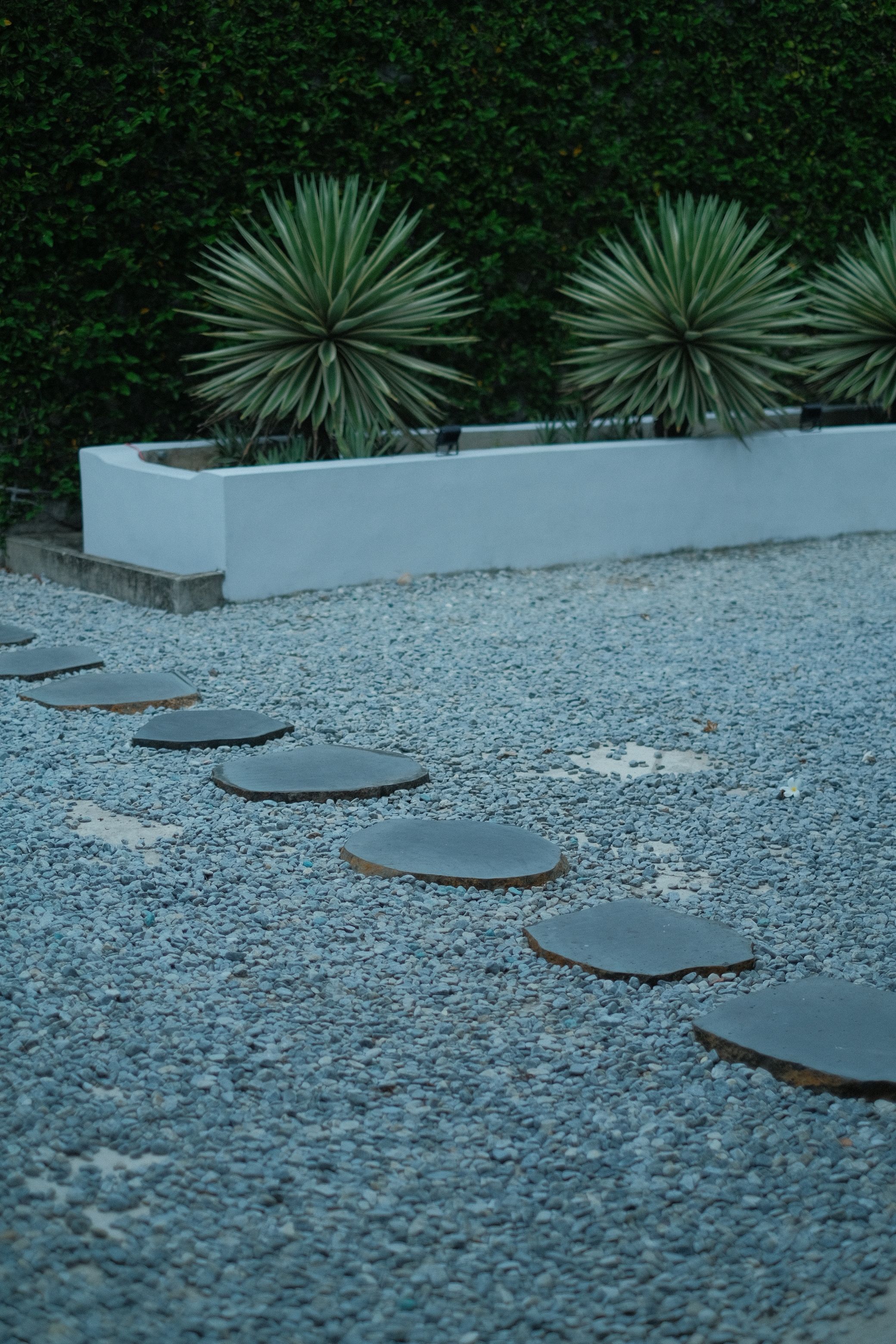
Xeriscaping is the practice of designing a yard to thrive on very little water, and in Las Vegas it usually means replacing thirsty grass with decorative rock, drought tolerant plants, boulders, and efficient drip irrigation. The payoff is real: a lower water bill, far less upkeep, and a yard that stays attractive through the Mojave summer. Southern Nevada also rewards the switch, since the Southern Nevada Water Authority pays a rebate for every square foot of grass you remove. This guide walks a Las Vegas homeowner through why xeriscaping makes sense, the exact steps to convert a lawn, and how to choose materials that last.
Why should you xeriscape in Las Vegas?
Las Vegas sits in the Mojave Desert and draws most of its water from the shrinking Colorado River, so outdoor water use is under constant pressure across Clark County. A traditional lawn is the single thirstiest part of most yards, and it needs mowing, fertilizing, and reseeding to stay green. Xeriscaping removes that burden. A well designed desert landscape uses a fraction of the water, needs only occasional raking and pruning, and holds its look year round rather than browning out in July.
There is a financial incentive too. Through the Southern Nevada Water Authority Water Smart Landscapes Rebate, homeowners are paid a set amount for each square foot of grass they convert to a water efficient landscape, and local water district customers can stack an additional per square foot incentive on top. Rebate rates change over time, so check the SNWA program page for the current amount before you start, but for a typical front yard the rebate can cover a meaningful share of the conversion.
Does the Nevada grass ban apply to my home?
This is the question we hear most, and the answer for homeowners is reassuring. Nevada law AB356 bans the use of Colorado River water on nonfunctional turf, meaning purely decorative grass along streets, medians, office parks, and HOA common areas, starting January 1, 2027. It does not apply to grass at single family residences. So as a homeowner you are not legally required to tear out your lawn. Many people choose to anyway, because the water savings and the SNWA rebate make xeriscaping worth it on its own, and because a desert landscape simply fits how we live in Southern Nevada.
How do you convert a lawn to a desert landscape?
A lawn conversion follows a clear sequence. Taking it step by step keeps the project smooth and the finished yard looking intentional rather than bare.
- Plan and measure. Sketch your yard, note sun and shade, and decide where you want plants, rock, pathways, and any focal points. Measure the square footage so you can size materials and, if you plan to apply, document it for the rebate.
- Remove the grass. Kill and strip the existing turf, then clear the roots so it cannot return under your new landscape.
- Prepare the base. Grade the soil for drainage away from your home and lay a quality weed barrier. For planting beds, amend the ground so new roots can establish.
- Set the structure. Place boulders and any hardscape first, since these are the hardest to move once rock is down and they anchor the whole design.
- Plant, then cover. Install drought tolerant plants on drip irrigation, then spread decorative rock as ground cover at about two inches deep.
- Finish and adjust. Rake to an even depth, tune the irrigation timer for the season, and top dress any thin spots.
What materials work best for a Las Vegas xeriscape?
A convincing desert landscape layers a few materials so it reads as designed rather than plain. Start with decorative rock as your main ground cover, choosing warm golds and tans to complement desert plants and local stucco. Add decorative boulders as natural focal points to give the yard height and structure. Build beds and grade on a clean foundation of bulk sands and soils, and if you still want one soft green space for kids or pets, artificial turf stays green with no watering at all. For a designer accent, our specialty rock adds unique color and texture to a feature area.
Design tips for a xeriscape that looks great
The difference between a flat gravel lot and a striking desert landscape is composition. Group plants with similar water needs together so your drip zones are efficient. Use boulders in odd numbered clusters and bury about a third of each stone so it looks like it grew from the ground. Vary rock color between a main field and a contrasting accent to create depth. And leave open, raked areas so the eye has somewhere to rest. These small choices make a low water yard feel lush rather than sparse.
Frequently Asked Questions
How much water can xeriscaping save?
Because turf is the thirstiest part of most yards, replacing it with rock and drought tolerant plants dramatically cuts outdoor water use, which is typically the largest share of a Las Vegas home's water bill in the warm months.
Do I qualify for the SNWA rebate as a homeowner?
Single family homeowners in the Las Vegas valley can apply for the Southern Nevada Water Authority Water Smart Landscapes Rebate when converting grass to a qualifying water efficient landscape. Check the current terms and per square foot amount on the SNWA program page before you begin.
Is xeriscaping the same as zero landscaping?
No. Xeriscaping is a designed, planted, low water landscape with rock, boulders, and drought tolerant plants. It is not a bare gravel yard, and a good design looks full and intentional.
Can Boulder Placement supply everything for a conversion?
Yes. We carry decorative rock, boulders, bulk sand and soil, and artificial turf in one yard, so you can source your whole xeriscape and have it delivered on a single schedule.
Start your Las Vegas xeriscape
Thinking about trading your lawn for a low water desert landscape? Call Boulder Placement at (702) 896-2070 or request a free estimate through our contact page, and our family owned Las Vegas team, serving the valley since 1994, will help you plan and supply the materials your conversion needs.