

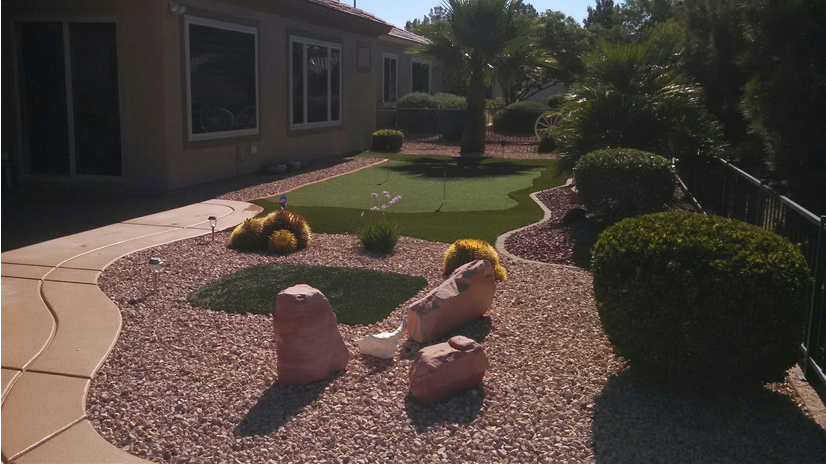
The short answer: to figure out how much decorative rock you need, multiply the area you are covering in square feet by the depth you want in feet, which gives you the volume in cubic feet, then convert that to cubic yards or tons for ordering. For most Las Vegas ground cover projects, a depth of about two inches is standard, and one cubic yard of rock covers roughly 160 square feet at that depth. Below we walk through the exact math, the right depth for each situation, and how to order the correct amount the first time. If you would rather skip the calculations, call Boulder Placement at (702) 896-2070 and we will size your project for free.
How do you calculate decorative rock coverage?
Coverage comes down to one formula: area times depth equals volume. Measure the length and width of your space in feet and multiply them to get the square footage. Then choose a depth, convert it to feet, and multiply again. Two inches of depth is 0.167 feet, so a 300 square foot bed at two inches works out to about 50 cubic feet of rock.
Because rock is often sold by the cubic yard or by the ton, the last step is converting. One cubic yard equals 27 cubic feet, and one cubic yard spread two inches deep covers about 160 square feet. So that 300 square foot bed needs a little under two cubic yards. Knowing the square footage and your target depth is really all we need to give you an accurate order, and it is the fastest way to avoid a second delivery trip.
What depth of decorative rock should you use?
Depth is the detail most people get wrong, and it changes both how your yard looks and how well it holds up. Here are the depths we recommend for the desert:
- Standard ground cover: about two inches, deep enough to hide soil and your weed barrier while keeping the look clean.
- Weed suppression and high traffic areas: closer to three inches, since a thicker layer blocks more light and resists thinning where people walk.
- Dry creek beds and drainage swales: three to four inches or more, so water moves through the stone instead of washing it away.
- Accent areas around boulders: vary the depth slightly to help larger stones look settled rather than perched on top.
Under any rock layer, a quality weed barrier and a firm, compacted base keep the stone from sinking into native soil over time. If you are building beds from scratch, our bulk sands and soils create a clean, level base before the decorative rock goes down.
Does rock size change how much you need?
Yes, a little. Smaller material like a three eighths inch gravel settles into a smooth, even blanket, so its coverage is very close to the formula above. Larger one inch and bigger stones stack with more air gaps and uneven surfaces, so it is smart to order slightly more to reach a consistent look. Rounded river rock also rolls and shifts more than angular crushed rock, which matters on slopes. When you browse our selection of decorative landscape rock in golds, tans, and grays, the size of the stone is listed so you can plan coverage with confidence.
How do you measure an irregular yard?
Few desert yards are perfect rectangles, so the trick is to break your space into simple shapes and add them together. Divide the area into rectangles, triangles, and circles, calculate each one, then total the square footage. For a rectangle, multiply length by width. For a triangle, multiply the base by the height and divide by two. For a circle, multiply the radius by itself and then by 3.14. Measuring in sections is more accurate than eyeballing the whole yard, and it keeps your rock order tight.
Should you order decorative rock by the ton or by the cubic yard?
Landscape rock is usually sold by weight, so the ton is the most common ordering unit, while the cubic yard describes volume. The reason both matter is that different rock types weigh different amounts for the same volume, so coverage per ton is not identical across every product. A dense granite covers less area per ton than a lighter, more porous stone. Rather than guess, share your square footage and chosen material with us, and we will translate it into the exact tonnage. We deliver loose material straight to your driveway across the valley, including decorative rock delivery in Summerlin and the surrounding communities.
Tips to avoid ordering too little or too much
A few habits keep your project on budget and on schedule. Add roughly five to ten percent to your calculated amount to account for settling, uneven ground, and edges. Keep a small stock of leftover stone to top dress thin spots later, since matching the exact color years down the road can be tricky. And measure twice before you order, because a short load means waiting on a second delivery while a finished look sits half done.
Frequently Asked Questions
How many inches of rock should go over a weed barrier?
Aim for at least two inches over a quality weed barrier for standard ground cover, and closer to three inches in high traffic areas or where you want stronger weed suppression. A layer that is too thin lets light through and allows weeds to push up.
How much area does a ton of decorative rock cover?
It depends on the rock type and size, because denser stone covers less area per ton than lighter stone. As a starting point, tell us your square footage and the material you like, and we will calculate the exact coverage for your project at no charge.
Do you deliver decorative rock in Las Vegas?
Yes. We deliver decorative rock and bulk material to a drop spot with good road access, usually your driveway or approach, throughout the Las Vegas valley so you or your landscaper can spread it on your own schedule.
Can Boulder Placement help me calculate how much rock I need?
Absolutely. Share your measurements and the look you want, and we will help you size the order and offer a free estimate before you buy.
Get an exact rock estimate for your yard
Ready to order the right amount the first time? Call Boulder Placement at (702) 896-2070 or request a free estimate through our contact page, and our family owned Las Vegas team, serving the valley since 1994, will help you choose, size, and deliver your decorative rock.